




X
Trustworthy Source
PubMed Central
Journal archive from the U.S. National Institutes of Health
Go to source
Proving the Doctor Was Negligent
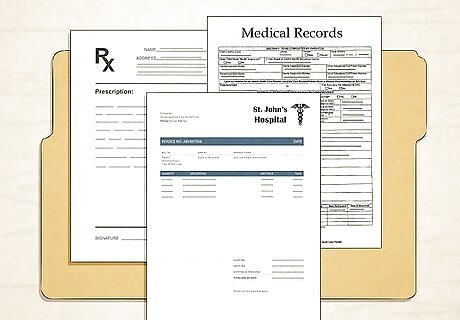
Document the doctor-patient relationship. Typically, it's pretty obvious if you have a doctor-patient relationship — if you hired the doctor specifically, you clearly have a doctor-patient relationship. A bill from the doctor or appointment notice would prove that. If you're a patient at a hospital, you could potentially have a doctor-patient relationship with any doctor who works there and happens to treat you. Those doctors' names would be in your hospital records. For example, if you go to a hospital for surgery, you would have a doctor-patient relationship with the doctor who advised the surgery, the surgeon, and any doctors who follow up with you after surgery. In most states, if a doctor provides emergency care for you voluntarily in public, you can't later sue them for malpractice. The laws that protect them typically require you to be in "imminent peril," meaning that you would likely die if they didn't intervene immediately.
Identify the appropriate standard of care. The standard of care for the doctor is a local one and depends on the facilities and equipment available. The best way to find out is to ask another local doctor. Generally, any doctor is legally required to use sound medical judgment and render competent care. That doesn't mean they have to be perfect. They are allowed to make mistakes as long as those mistakes are reasonable and understandable given the circumstances. For example, if you went to the ER with all the symptoms of COVID-19, but the doctor who examined you said you just had a cold and sent you home, that doctor might not have provided the appropriate standard of care.

Use medical records as evidence of negligent treatment. As soon as possible, request your full chart and medical records from the facility where you were treated. Your lawyer or a medical expert will compare these to the appropriate standard of care and note instances where your doctor's behavior fell short. Lawyers who specialize in medical malpractice are typically pretty good at reading medical records themselves since they see so many in their practice. However, even the most experienced lawyers will hire experts to review records in more complex cases. You can also rely on your own memories about things the doctor said to you, even if they aren't recorded in your medical records. For example, you might've asked to be tested for a particular disease you thought you had but the doctor thought the test was unnecessary.

Bring in expert witnesses to testify that the doctor was negligent. Typically, you'll need at least one other doctor to say they believe your doctor was negligent. There are some doctors who specialize in this. If you think you've got a medical malpractice case, talk to an attorney — they know doctors who do this type of work. Depending on the nature of your injuries or complications, you might need to be examined by another doctor before they can decide whether the doctor was negligent.
Identifying the Injury Caused by the Negligence
Start your analysis with the mistake the doctor made. Medical malpractice hinges on a mistake the doctor made that they shouldn't have made, and wouldn't have made if they were applying the appropriate standard of care. Mistakes that could lead to a malpractice claim include: Misdiagnosis or failure to diagnose a disease or condition Misreading or ignoring laboratory test results Unnecessary surgery or surgical errors Improper medication or dosage instructions Premature discharge or poor follow-up or after-care Failure to recognize symptoms or order proper testing
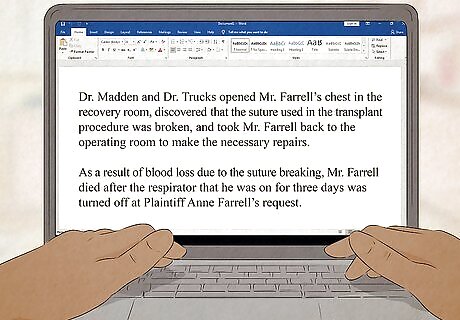
Document the injury or loss that followed the doctor's mistake. You don't have a medical malpractice claim unless you suffered some kind of injury or loss. You're going to argue that the injury or loss you suffered was caused by the doctor's mistake — but first, you have to identify the specific injury or loss you suffered. For example, suppose your doctor failed to diagnose a disease you had. As a result of that failure, you took medication you didn't need and that didn't help your condition, which instead worsened. That's the injury or loss that followed the doctor's mistake. As another example, suppose you were discharged after surgery before you should have been. You developed an infection that required another surgery. If you'd stayed in the hospital, the infection never would've developed or would've been caught earlier and not required surgery. Here, the infection and follow-up surgery would be your injury or loss.

Get expert testimony that the doctor's mistake caused your injury. Usually, medical malpractice cases break down to the "battle of the experts." You'll have a doctor (or several doctors) testify on your behalf to claim that the injury you suffered was caused by the doctor's negligence. The doctor will have their own experts who will argue that the doctor's mistake didn't cause the problem, or that you would've had the problem anyway. For example, suppose you've established that your doctor's delay in diagnosing cancer was negligent. You've still got to prove that your outcome was worse because of that delay. Oncologists and other specialists would look at your records and talk to you and your doctor to get a sense of what would've happened if your doctor hadn't made that mistake. Even if the injury you suffered was caused by the doctor's negligence, if it's also a fairly common complication of the medical treatment you received, you'll have a hard time proving malpractice. You have to show that you only could've had that injury or complication if the doctor's treatment was negligent.
Calculating Losses Resulting from the Injury

Collect receipts for your out-of-pocket expenses. At a minimum, you're entitled to recover the out-of-pocket expenses you incurred as a result of your doctor's negligence. These expenses might include medical bills, prescription drug costs, and over-the-counter medications and medical equipment. If you aren't able to find receipts for all of these expenses, bank or credit card records also work. Include bills that you haven't paid yet, such as hospital bills or doctor's bills for any additional procedures you needed following your doctor's negligence.
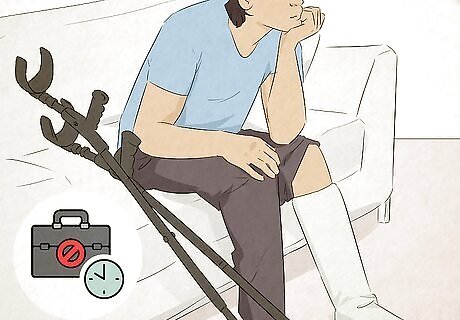
Keep records of the time you spent out of work. Your damages resulting from your doctor's negligence also include any lost wages. Even if you had paid time off work, this still counts, because you lost sick days that you would otherwise have. If someone else was caring for you after the injury, the time they had to take off work counts here as well. They lost income while taking care of you.

Get opinions from other doctors about your loss of capacity. Depending on the type of injury or complications you suffered as a result of the malpractice, you might have lost some degree of functioning or capacity that you have to live with for the rest of your life. Your state law provides a formula by which these losses are quantified and assigned a monetary value. Testimony from family and friends who are familiar with your lifestyle and normal activities before the incident helps establish how the injury has affected you. For example, if you used to be an avid bowler and can no longer bowl due to complications after a botched surgery on your shoulder, you'd potentially be able to get some money to compensate you for that loss.

Document the emotional toll on you and your family. This is perhaps the most difficult part of a medical malpractice claim to prove, but it's also where you'll potentially get the most money. A health crisis takes a tremendous toll on you and those who love you. Counselors and psychiatrists can help quantify the emotional toll so you can consider a dollar figure that might compensate for that distress. For example, a psychiatrist might testify on your behalf that because of your condition you lapsed into a deep depression that they believe will follow you for the rest of your life. Not only would you be entitled to seek money to provide for your future mental care, but also money to compensate you for the loss of your quality of life. If you suffered scars or disfigurement related to the doctor's negligence, you might be entitled to some money to compensate for this as well.












Comments
0 comment