





Taking Your Birth Control Pill
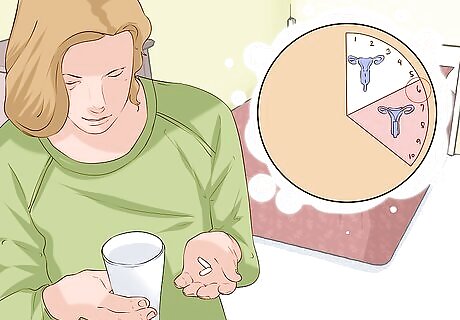
Start your pill the day after your period ends. The pill can technically be started at any time, but most doctors recommend this as it is the simplest way to begin. If you begin right after your last period, the pill is usually effective right away. However, some doctors recommend using condoms or spermicide (or an additional "back-up" method of birth control for the first month just to make sure). The pill generally consists of 21 days of hormone treatment, followed by 7 days "off" (or 7 days of sugar pills, depending what type of pill you are on). Newer pills may only have 4 days 'off' to shorten the duration of the bleeding.
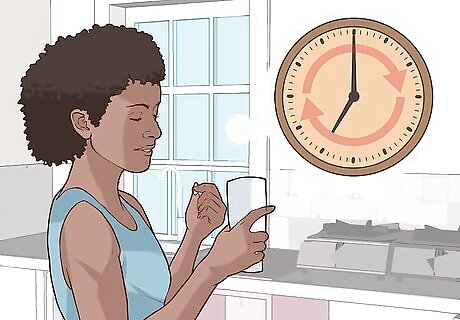
Take your pill at the same time every day. It does not matter what time of day you take it, just that you are consistent with it each day. Remember that you are putting hormones into your body, which will serve to regulate your menstrual cycle. It is important to take the pill at the same time daily in order to keep your hormone levels consistent. Also, effectiveness of the pill is enhanced for those women who remember to take it at exactly the same time every day.
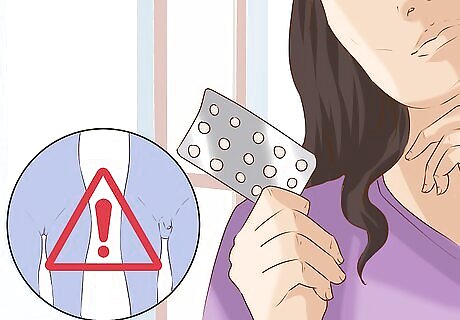
Understand that the pill does not protect you from sexually transmitted infections (STIs). Doctors recommend either to have yourself and your partner tested for STIs prior to sexual intercourse, or to use a form of barrier protection (such as condoms) to diminish the likelihood of contracting a sexually transmitted infection.
Creating a Routine to Remember Your Birth Control Pills

Add it to another part of your daily routine. Examples include while eating breakfast in the morning, on the bus on your daily commute, at the same time as brushing your teeth (in the morning or evening), or placing it on your nightstand to take as you go to bed at night. If you add taking the pill to something that is already a part of your daily routine, it helps you to remember by association. Try to make it as easy as possible for yourself to remember. For example, if you want to link it to the activity of brushing your teeth, place your pack of pills beside your toothbrush. That way, when you begin brushing, the visual aid of seeing your pills there will help you to remember. Remember that the more you establish a routine, the more it will become second nature!
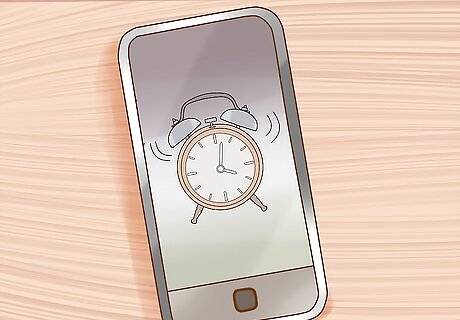
Set an alarm on your cell phone. Most people today have their cell phone with them almost all of the time. Set an alarm for the same time every day, and be sure you are carrying your pills with you at this time. Some women do this first thing in the morning, or before they go to bed at night (if this is around the same time every day). Some women carry their birth control pills in their purse so that they are conveniently available at whatever time they set their alarm.
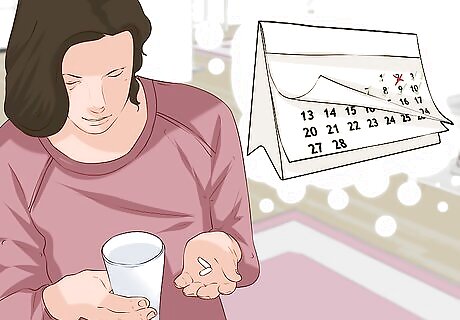
Know what to do if you forget one or more of your pills. If you have forgotten just one pill, take two the following day and resume your normal schedule from there. If you have forgotten two or more consecutive pills and have had unprotected intercourse, it is advisable to use something called "emergency contraception." This can be used up to 5 days after intercourse has taken place to prevent pregnancy. Options for emergency contraception include Plan B (a progestin-only pill, 89% risk reduction) and Yuzpe (a mixture of progestin and estrogen, 56-89% risk reduction). These can be purchased over the counter at your local pharmacy. Both pills work better the sooner they are taken, but are effective anytime up to 5 days after having unprotected intercourse. Another option for emergency contraception is insertion of a Copper IUD (99.2% risk reduction). If you have consistent trouble remembering to take your birth control pills, despite the methods suggested above, perhaps it is wise to consider an alternate method of contraception. Some alternate options are outlined in the next section.
Understanding Other Options for Birth Control
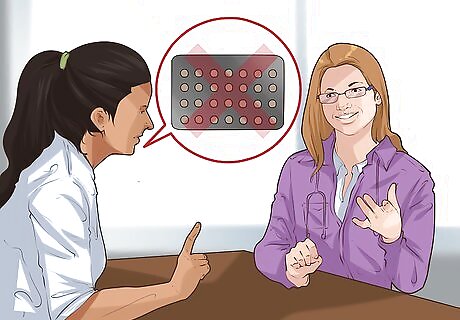
Know that there are other options for contraception if you have trouble remembering your pill. Some women, no matter how hard they try, simply do not feel able to remember to take a pill at the same time every day. The stress can outweigh the benefits, and it can become a constant worry. In cases such as these, consult your family doctor about alternate methods of contraception. There are a number of options out there, so do not feel limited to the pill if it is too hard for you to remember.
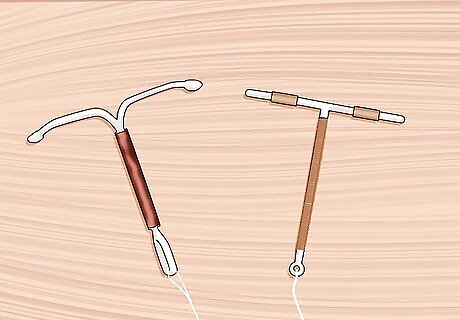
Learn about intrauterine devices (IUDs). These are currently the "gold standard" (considered the "best option" by doctors) for birth control in women, and they are a very good alternative to the pill if you have trouble remembering. IUDs, after being inserted, last last 3-10 years (depending on the IUD) without needing to be changed. You do not need to "remember" to take a pill on a daily basis, which can be simpler for many women. IUDs are also a more effective means of contraception, with over a 99% success rate (as opposed to a 91% average efficacy with the pill).

Inquire about other options for contraception with your family doctor. There are numerous options available, including injections, patches, male and female condoms, diaphragms, and spermicides to name a few.











Comments
0 comment